


Can a Dump Trailer Haul Concrete? Know the Weight

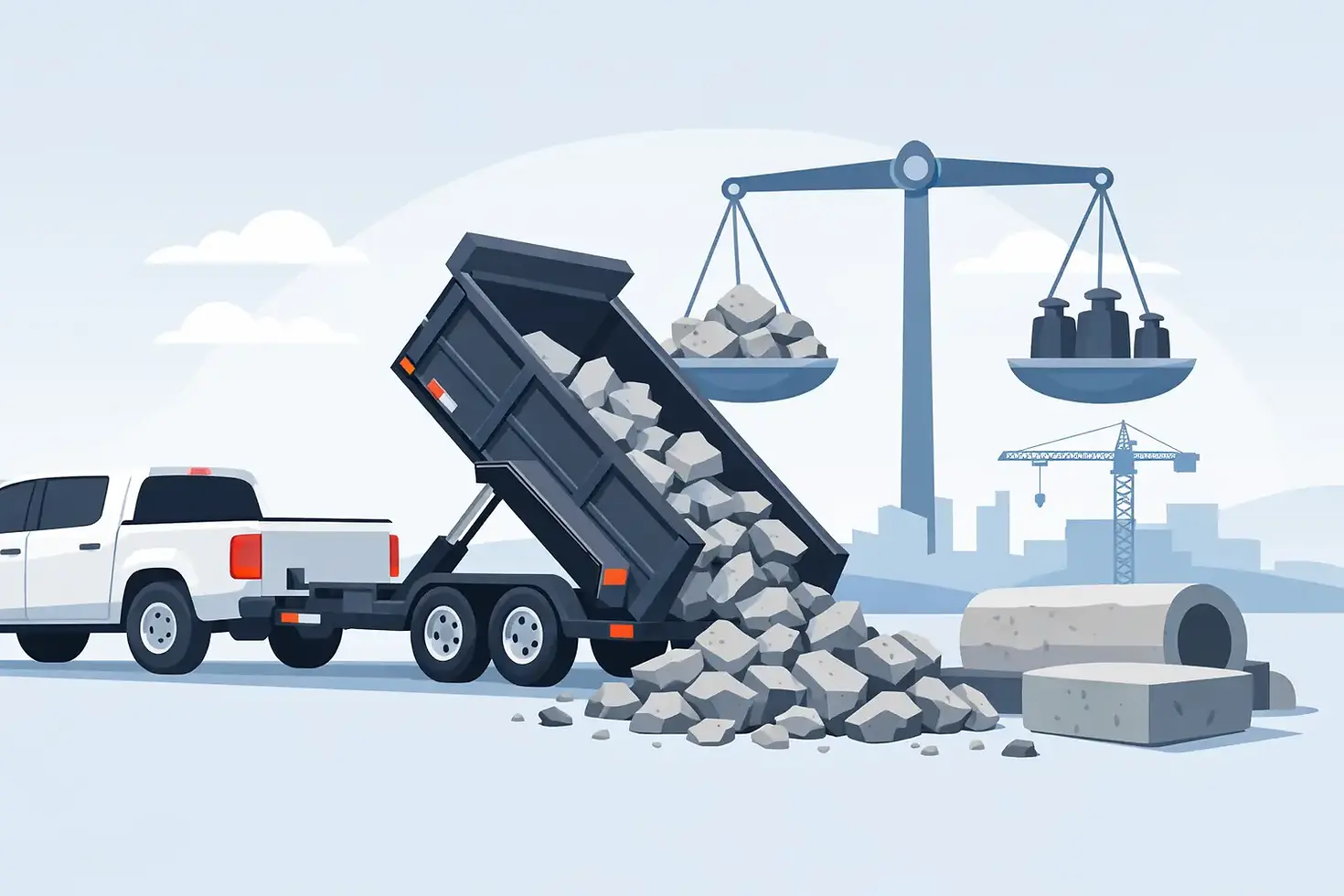
A few broken-up concrete slabs can fill a trailer faster than most people expect. So, can a dump trailer haul concrete? Yes, it can haul concrete debris when the trailer, tow vehicle, and load are matched correctly. The real question is how much concrete your specific dump trailer can safely carry.
Concrete is one of the heaviest materials homeowners and contractors commonly haul. A trailer that handles yard debris, furniture, or brush with room to spare may reach its legal payload limit with only a small pile of concrete chunks. Before loading, know the weight, work within the trailer's ratings, and have a plan for unloading at an approved facility.
Can a Dump Trailer Haul Concrete Safely?
A dump trailer is often a practical choice for hauling broken concrete from a driveway replacement, patio demolition, fence-post removal, or cleanup job. Its hydraulic lift makes unloading much easier than shoveling material out of a utility trailer or pickup bed.
But concrete is not a material to load by appearance. It is dense, uneven, and hard on equipment when loaded carelessly. A safe load depends on the trailer's payload capacity, not just how large the bed looks.
Start with the trailer's Gross Vehicle Weight Rating, or GVWR. This is the maximum allowed weight of the loaded trailer, including the trailer itself. Subtract the empty trailer weight from the GVWR to find the available payload. That payload must cover every piece of concrete, along with tools, straps, tarps, and anything else in the trailer.
Your tow vehicle also matters. It must be rated to pull the loaded trailer and handle the trailer's tongue weight. A trailer can be within its own rating yet still be too heavy for the truck towing it.
How Much Does Concrete Weigh?
Normal cured concrete weighs roughly 4,000 pounds per cubic yard. That is about 150 pounds per cubic foot. The exact weight changes with moisture, dirt mixed into the load, rebar, block, and the size of the pieces, but this estimate is a useful starting point.
For a quick real-world example, a typical 4-inch-thick concrete driveway section measuring 10 feet by 10 feet is about 1.23 cubic yards. That one section can weigh close to 5,000 pounds before accounting for extra soil or reinforcing steel.
That is why loading "just one more bucket" can become a problem fast. If you are using a skid steer, mini excavator, or loader, confirm the bucket size and material weight before making repeated passes. A full bucket of concrete rubble may weigh far more than a full bucket of mulch or topsoil.
Wet Concrete Is a Different Situation
A dump trailer is generally meant for hauling cured concrete debris, not transporting wet ready-mix concrete. Wet concrete is extremely heavy, can shift while traveling, and may harden inside the trailer bed if the job runs behind schedule.
Once concrete cures in a trailer, removal can be difficult and may damage the floor, sidewalls, tarp system, or hydraulic components. If you need ready-mix delivered for a pour, use a concrete truck or a purpose-built concrete buggy. Do not treat a rental dump trailer like a mixer or a disposable form.
Check the Numbers Before You Load
The safest approach is to estimate conservatively and load in smaller trips if there is any doubt. A lighter load may cost an extra disposal run, but it is cheaper than damaging a trailer, overworking a truck, or creating an unsafe road situation.
Here is the basic calculation:
Trailer payload capacity = GVWR - empty trailer weight
Then estimate your concrete load and keep a safety margin. Do not plan to load right up to the limit, especially if you are also hauling dirt, rebar, block, or demolition debris. Those materials are easy to underestimate.
For example, if a dump trailer has a 14,000-pound GVWR and an empty weight of 4,000 pounds, its maximum payload is 10,000 pounds. Two cubic yards of concrete could weigh around 8,000 pounds. That may sound acceptable on paper, but the total can climb quickly when soil, moisture, and other debris are mixed in.
If you do not know the trailer's empty weight or payload rating, stop and ask before loading. The trailer's capacity information should be clear, and the rental provider can help you choose the right size for the job.
Load Concrete the Right Way
Concrete chunks can damage a trailer when they are dropped from height or piled in one spot. Spread the load across the trailer floor as evenly as possible. Put the heaviest material low and toward the front half of the bed, while avoiding excessive tongue weight.
Do not slam large slabs into the trailer with a machine. Place them carefully, then break oversized pieces down when practical. This protects the floor and makes the load more stable for travel.
Keep these four loading habits in mind:
Load in layers instead of creating one tall, heavy pile.
Spread the weight from side to side to prevent an uneven trailer.
Keep the material below the bed rails and secure loose debris with a tarp when required.
Remove or cut exposed rebar that could damage the trailer, puncture a tire, or create a hazard during unloading.
Before leaving, check that the coupler is locked, safety chains are connected, the breakaway cable is attached, lights work, and the trailer tires are properly inflated. Concrete loads put real stress on tires, brakes, suspension, and hitch equipment.
Plan for Disposal Before the Demolition Starts
Not every landfill or transfer station accepts concrete, and some facilities separate clean concrete from mixed construction debris. Calling ahead can save a loaded trip and a major headache.
Clean concrete means concrete with little or no wood, trash, insulation, plastic, or household debris mixed in. Rebar may be accepted at some locations, but rules vary. If you keep concrete separate during demolition, disposal is usually simpler and may cost less than hauling a mixed load.
This is also where a dump trailer earns its keep. Once you are at an approved disposal site, the hydraulic lift can unload the material without the hours of hand labor that a flatbed or pickup may require. Still, make sure the ground is level and firm before raising the bed. A heavy concrete load can shift suddenly during dumping, especially on a slope or uneven surface.
Avoid Dumping on Soft or Sloped Ground
Never raise a loaded dump bed under power lines, low tree branches, or inside a garage. Keep people clear of the rear of the trailer, and do not stand beside the raised bed while material is coming out.
If the concrete is wedged together or frozen in place, do not climb into the raised trailer to free it. Lower the bed, assess the load safely, and get help if needed. Forcing a stuck load can create a rollover or equipment-damage risk.
When a Dump Trailer Is Not the Best Choice
A dump trailer is not always the answer. If the project involves a large driveway tear-out, a commercial slab, or several tons of dense material, a roll-off container, heavy equipment hauling service, or multiple scheduled loads may make more sense.
The same goes for a load made mostly of oversized intact slabs. Breaking them into manageable pieces may be necessary to protect the trailer and stay below capacity. Convenience should never override weight limits.
For smaller Central Florida projects, a properly sized dump trailer can be a solid solution for concrete cleanup. Patriots Trailer Rental can help customers think through trailer capacity, pickup or delivery needs, and disposal logistics before the first load goes in.
Concrete removal is hard work, but the hauling part does not have to become the problem. Measure the job, respect the weight, load carefully, and choose the equipment that gives you a safe path from demolition to disposal.


Comments