


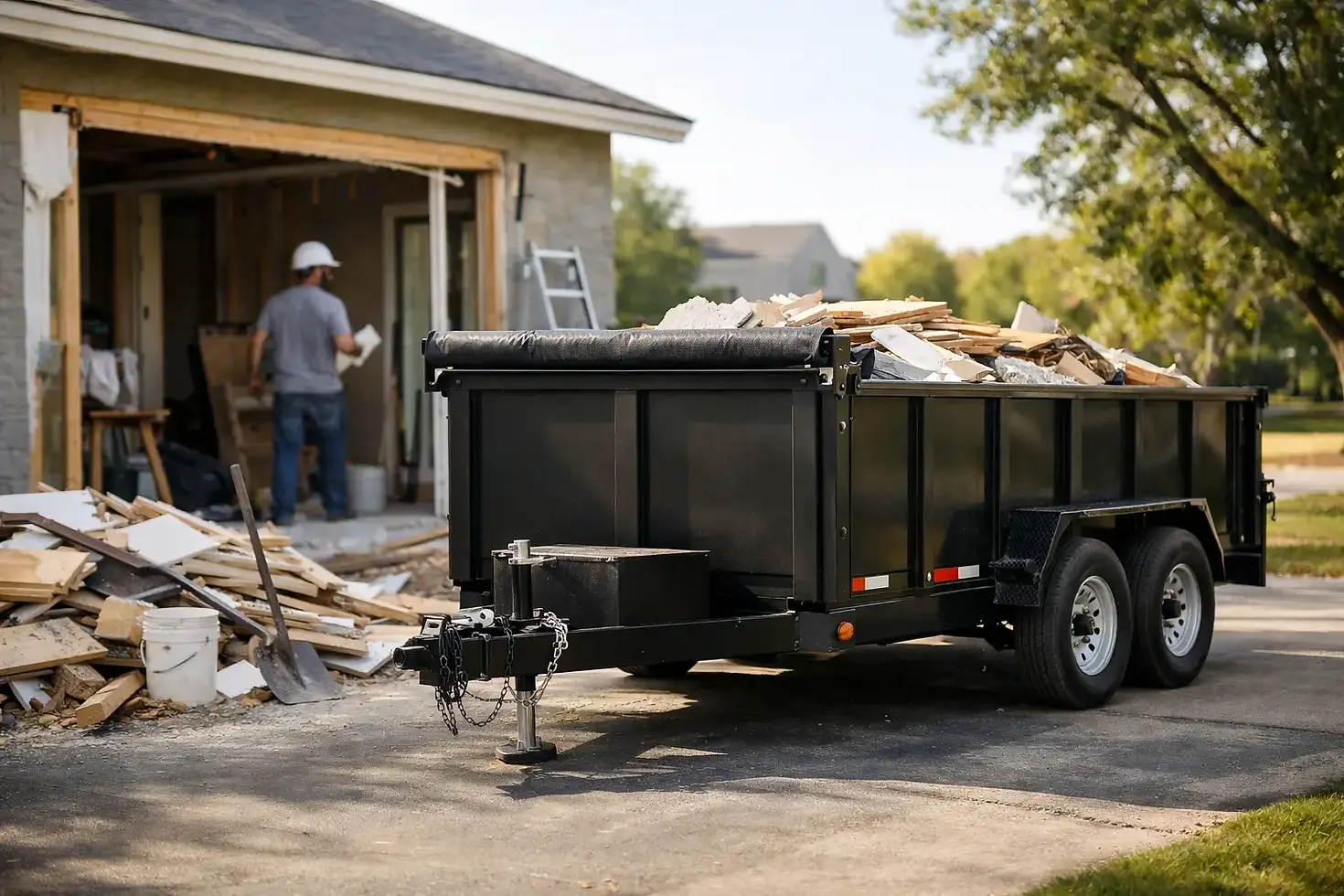
Choosing a Cleanup Trailer for Renovations

A renovation can look organized at 8 a.m. and turn into a driveway full of drywall, old cabinets, flooring, and broken fixtures by lunch. A cleanup trailer for renovations gives that debris one place to go while the work keeps moving. Instead of stacking waste in the yard or making repeated pickup-truck runs, you can load as you demo, clean as you go, and keep the jobsite safer.
For Central Florida homeowners and contractors, the right trailer choice comes down to more than how much debris fits inside. Weight, material type, driveway access, tow vehicle limits, and your disposal plan all affect what will make the job easier rather than create another problem to manage.
Start With the Renovation Debris
The biggest mistake is estimating a trailer by the size of the room instead of the material coming out of it. A bathroom renovation may not create much volume, but tile, mortar, a cast-iron tub, and cement board can add up fast. A kitchen remodel can fill a trailer with cabinets, drywall, countertops, and packaging, while a flooring project may create bulky but relatively manageable piles of carpet, laminate, or underlayment.
Think about whether your debris is heavy, bulky, or a mix of both. Heavy debris reaches a trailer's safe payload limit sooner. Bulky debris may leave open space, but it still needs to be loaded securely and kept below the trailer sides. Clean wood, cardboard, metal, and reusable fixtures can sometimes be separated from general construction debris to make loading and disposal more efficient.
A quick walkthrough before demolition helps. Estimate the large items first, then consider the hidden material behind walls, under flooring, and inside cabinets. Renovations often produce more waste than the finished room suggests.
Why a Dump Trailer Works Well for Renovation Cleanup
For most demolition and cleanup work, a dump trailer is the practical choice because it is built for material hauling and can unload without hand-shoveling every last load. That matters after a long day of pulling cabinets, tearing out flooring, or clearing a property for repairs. You load the trailer during the project, transport the debris when it is ready, and use the dump function to unload at an approved disposal site.
A utility trailer may be useful for lighter, oversized items or materials that do not need tall sides. However, it can require more careful tie-down work and may not be the best fit for loose demolition debris. An equipment hauler serves a different purpose altogether, such as moving machinery or vehicles to a jobsite. Matching the trailer to the actual load prevents wasted time and avoids trying to make one trailer do work it was not designed to handle.
A dump trailer is especially useful when the work includes a mix of lumber, old fence sections, drywall, cabinets, yard waste, and household junk. It keeps the cleanup contained and gives you a more efficient path from demo day to disposal day.
Choose the Right Size Without Overloading
Bigger is not automatically better. A larger trailer can reduce trips for light, bulky debris, but it also requires enough room to maneuver, a suitable tow vehicle, and a realistic plan for the total weight. If you are working in a tight neighborhood driveway or behind a home with limited access, the trailer needs to fit the space as well as the load.
Before reserving, be ready to discuss the type of renovation, the materials being removed, and whether you expect mostly light debris or dense material. The rental provider can help point you toward an appropriate option, but the final load still needs to stay within the trailer's posted capacity and your towing setup's limits.
Do not pack a trailer based only on how full it looks. Roofing shingles, tile, brick, concrete, soil, wet lumber, and plaster can become extremely heavy before the trailer appears full. When in doubt, plan for a partial load or separate dense materials from lighter demolition waste. A second trip is far less costly than an overloaded trailer, vehicle damage, or an unsafe trip to the landfill.
Check Your Tow Vehicle First
Your truck or SUV needs more than a hitch. Check its towing capacity, hitch rating, wiring connection, brake controller requirements, and payload capacity. Tongue weight counts against the vehicle's payload, along with passengers, tools, and supplies in the bed or cargo area.
If you do not have the right vehicle, do not force the issue. Delivery and pickup can be the better answer, especially for homeowners without towing experience, customers working on a busy schedule, or projects where the trailer will stay parked at the property while the work is underway. Patriots Trailer Rental can also handle landfill dump service, which removes one more step from the cleanup plan.
Plan the Trailer Location Before It Arrives
Where the trailer sits affects how quickly your crew can work. Place it close enough to the demolition area to avoid carrying debris across the property, but leave room for doors, gates, vehicles, and safe walking paths. Avoid blocking a garage, shared access point, or the route needed for material deliveries.
Look up as well as around. Low branches and overhead lines may affect delivery, pickup, or raising a dump trailer to unload. Soft ground can also become a problem after Florida rain, particularly when a loaded trailer is left in one place for several days. A firm, level location is usually the best choice.
If you are working at a rental property, HOA community, or commercial site, check any parking or placement rules ahead of time. A quick call can prevent a trailer from arriving only to find that it cannot be placed where you need it.
Load It Like the Trip to the Landfill Matters
A cleanup trailer for renovations works best when loading is treated as part of the job, not an afterthought. Put heavier material low and evenly distributed. Avoid piling dense debris at the rear or stacking it high in one corner. Uneven loading can affect handling, braking, and tongue weight.
Break down cabinets, long trim, and bulky packaging when practical. This creates more usable space and reduces loose pieces that can shift in transport. Keep sharp objects, exposed nails, and broken glass contained where possible. If you are loading drywall, insulation, or lightweight debris that can blow out, secure it properly before leaving the jobsite.
Do not mix in items a landfill may refuse or charge differently for without checking first. Paint, chemicals, propane cylinders, batteries, tires, appliances, and certain electronics often have separate disposal requirements. Disposal rules vary by facility and county, so confirm what your chosen site accepts before loading restricted items into the trailer.
Build Disposal Into the Rental Plan
Many renovation projects slow down because disposal was treated as the final task rather than a scheduled part of the work. Decide early whether you will tow and dump the trailer yourself or use a dump service. Your choice depends on your vehicle, available time, local landfill hours, debris type, and how comfortable you are towing a loaded trailer.
For a one-day bathroom demo, a daily rental and one disposal run may be enough. For a larger kitchen, rental turnover, or whole-home update, a flexible rental period can keep debris contained while multiple trades finish their work. It depends on how quickly the project produces waste and whether you need the trailer available for ongoing cleanup.
There is also a labor question. If your crew spends half a day making dump runs, that is half a day they are not installing, repairing, or finishing the work. Delivery, pickup, and landfill dump service can make sense when the value of your time is higher than the cost of handling those logistics yourself.
Keep the Project Moving, Not Piled Up
A trailer is most useful when it arrives before demolition starts, not after debris has already taken over the driveway. Reserve early when you know your project dates, allow room for schedule changes, and complete rental documents ahead of pickup when available. That gives you less paperwork to deal with on the morning work begins.
The goal is simple: keep debris under control so the renovation can move forward. Choose a trailer that fits the material, respect weight and towing limits, and set up a disposal plan before the first wall comes down. A clean work area makes every next step easier.


Comments