


What Size Dump Trailer Do I Need?

A lot of people start by asking what size dump trailer need for the job, but the better question is this: what are you hauling, how heavy is it, and how many trips can you afford to make? A trailer that looks big enough can still be the wrong choice if the material is dense, the load is awkward, or your tow vehicle is the limiting factor.
That matters on real projects. A weekend yard cleanup, a bathroom demo, and a mulch delivery can all use a dump trailer, but they do not need the same size or capacity. Picking right the first time saves trips, avoids overload problems, and keeps your project moving.
What size dump trailer do I need for my project?
The right size usually comes down to volume, weight, and access. Volume is how much space the material takes up. Weight is what your trailer and tow vehicle can safely handle. Access means whether you have room to maneuver, load, and dump where the trailer needs to go.
For lighter but bulky material like brush, limbs, cardboard, or household junk, people often need more trailer space than they expect. For heavy material like concrete, dirt, gravel, or roofing debris, weight becomes the deciding factor fast. A trailer can fill up by weight long before it looks full.
That is why there is no one-size-fits-all answer. If you are choosing between a smaller and larger dump trailer, the best option depends on the material more than the project name.
Start with the material, not the trailer
If you are hauling household junk, furniture, yard waste, or light construction debris, a moderate-size dump trailer usually gives you enough room without being harder than necessary to tow or place. These jobs create a lot of bulk, but not always a lot of weight.
If you are moving gravel, fill dirt, sand, concrete chunks, pavers, or wet debris, capacity matters more than floor space. Heavy loads can hit payload limits quickly. In those cases, a bigger trailer is not always better if it tempts you to overload it.
Roofing jobs are another category where people guess wrong. Shingles are dense. Demo debris from even a small roof tear-off can add up fast, especially if the material is wet. The same goes for remodel debris that includes tile, drywall, cabinets, and flooring all mixed together.
Landscaping jobs can go either direction. Mulch and brush take up space but stay relatively light. Sod, rock, and dirt are a different story. If your project includes both light and heavy material, it helps to think through which load will control your trailer choice.
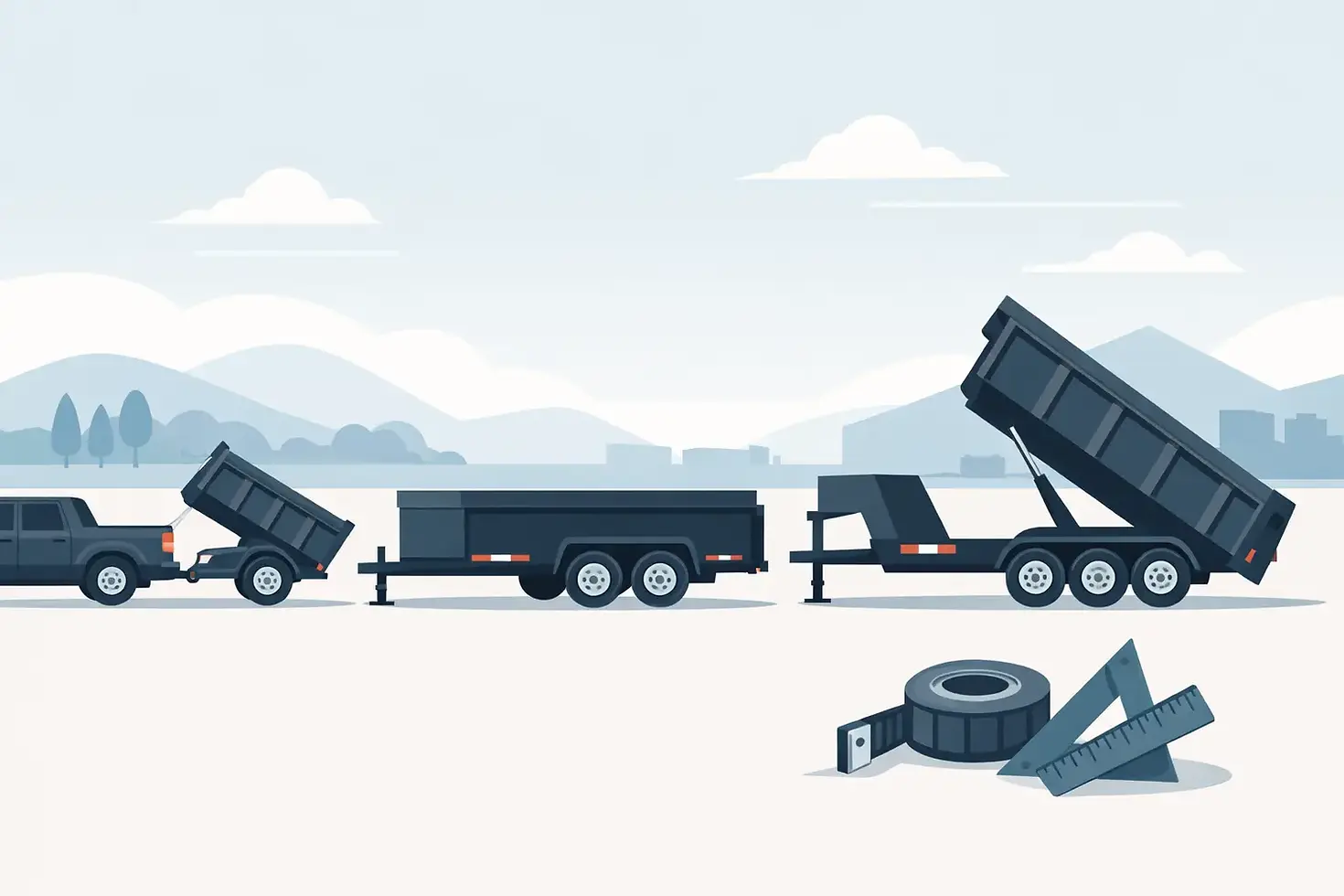
Common dump trailer sizes and what they are good for
In general, smaller dump trailers are easier for homeowners and first-time renters to manage. They fit better in driveways, tighter neighborhoods, and job sites with limited turning space. They also make more sense when your tow vehicle is a half-ton pickup or similar setup with lower towing capacity.
Mid-size dump trailers are often the sweet spot for mixed-use projects. They handle renovation debris, yard cleanup, moderate material hauling, and property cleanouts well. For many contractors and property managers, this size range gives a good balance between capacity and maneuverability.
Larger dump trailers make sense when you need serious hauling volume, but only if your tow vehicle is equipped for it and your site has room. They are useful for bigger cleanouts, landscaping supply runs, and larger demolition work. The trade-off is simple: more capacity can mean fewer trips, but it can also mean more room to get in trouble if the material is heavy.
If you are not sure where you fall, think in terms of trips. If a smaller trailer means three safe trips and a larger trailer means one overloaded trip, the smaller trailer is the better choice every time.
Weight matters more than most renters expect
The biggest mistake people make is focusing only on the bed size. They picture how much junk or material will fit inside, but they do not stop to calculate how much it will weigh once loaded.
Dirt, gravel, concrete, brick, and roofing debris can get heavy enough to limit you well before the trailer is visibly full. That is normal. A partially filled trailer carrying dense material may already be at a safe working limit.
This is also where your tow vehicle comes into play. Even if a dump trailer can handle the load, your truck still has to pull it, stop it, and control it safely. Towing capacity, hitch rating, payload rating, brake controller setup, and trailer brake function all matter. If your truck is on the edge, going with a smaller trailer is usually the smarter move.
A straightforward rental company should help you think through this before pickup. That is part of getting the right trailer, not just renting the biggest one available.
What size dump trailer need for home projects?
For most home projects, you do not need the largest dump trailer on the lot. You need one that fits your driveway, works with your vehicle, and gives you enough room for the material you are actually removing.
A garage cleanout, yard cleanup, fence removal, or small remodel usually calls for practical capacity rather than maximum size. In those jobs, loading convenience matters a lot. You want a trailer low enough and accessible enough that you can work efficiently without turning the whole job into a lifting contest.
For heavier home jobs like concrete removal, paver tear-out, or a full roofing cleanup, think smaller and safer rather than bigger and fuller. The weight adds up quickly, and many homeowners are better off making an extra run than stressing the trailer or tow vehicle.
If you are dealing with a narrow driveway, soft ground, HOA restrictions, or limited turnaround space, trailer size also affects placement. A slightly smaller trailer that can be dropped exactly where you need it may save more time than a larger one that is awkward to load.
Contractors and landscapers need to think differently
If you haul regularly, trailer size is a productivity choice. The right trailer can cut trips, labor, and downtime. The wrong one can slow loading, reduce legal payload, or create headaches on tight job sites.
Contractors often need to think about debris type by phase. Framing debris, drywall, flooring, roofing, and concrete all behave differently. Landscapers have the same issue with mulch, brush, sod, dirt, and rock. A trailer that is perfect for one load may be a poor match for the next.
That is why many pros choose based on their most common material, not their biggest possible job. If most of your work is mixed debris and occasional heavier loads, a balanced dump trailer size is often the most efficient choice overall.
A few practical questions to ask before you rent
Before reserving a dump trailer, ask yourself how heavy the load will be, not just how big. Think about whether your truck is rated to tow it safely, whether the site has room for delivery or maneuvering, and whether the material is light and bulky or dense and compact.
You should also consider how you plan to load it. Wheelbarrow loading, hand loading, and machine loading can all affect what trailer size feels practical. A bigger trailer is not always easier if the sides are harder to reach or the placement is less convenient.
And think about the finish line. Are you hauling to a landfill, to another property, or just trying to stage debris for pickup? In some cases, a smaller trailer with dump service or pickup support makes more sense than trying to maximize trailer size on your own.
The best answer is usually a conversation, not a guess
If you are asking what size dump trailer do I need, you are already asking the right question. The smart next step is to match the trailer to the material, your vehicle, and the job site instead of choosing by appearance alone.
For a lot of projects, the right fit is not the biggest trailer. It is the one that gives you enough room, stays within safe weight limits, and keeps the job simple. That is especially true when time matters and you do not want surprises after pickup.
If you are unsure, give the rental company the real details - what you are hauling, what you are towing with, and where the trailer needs to go. A dependable local rental team like Patriots Trailer Rental can usually point you to the practical choice fast. The best trailer is the one that lets you finish the job without fighting the equipment.


Comments