


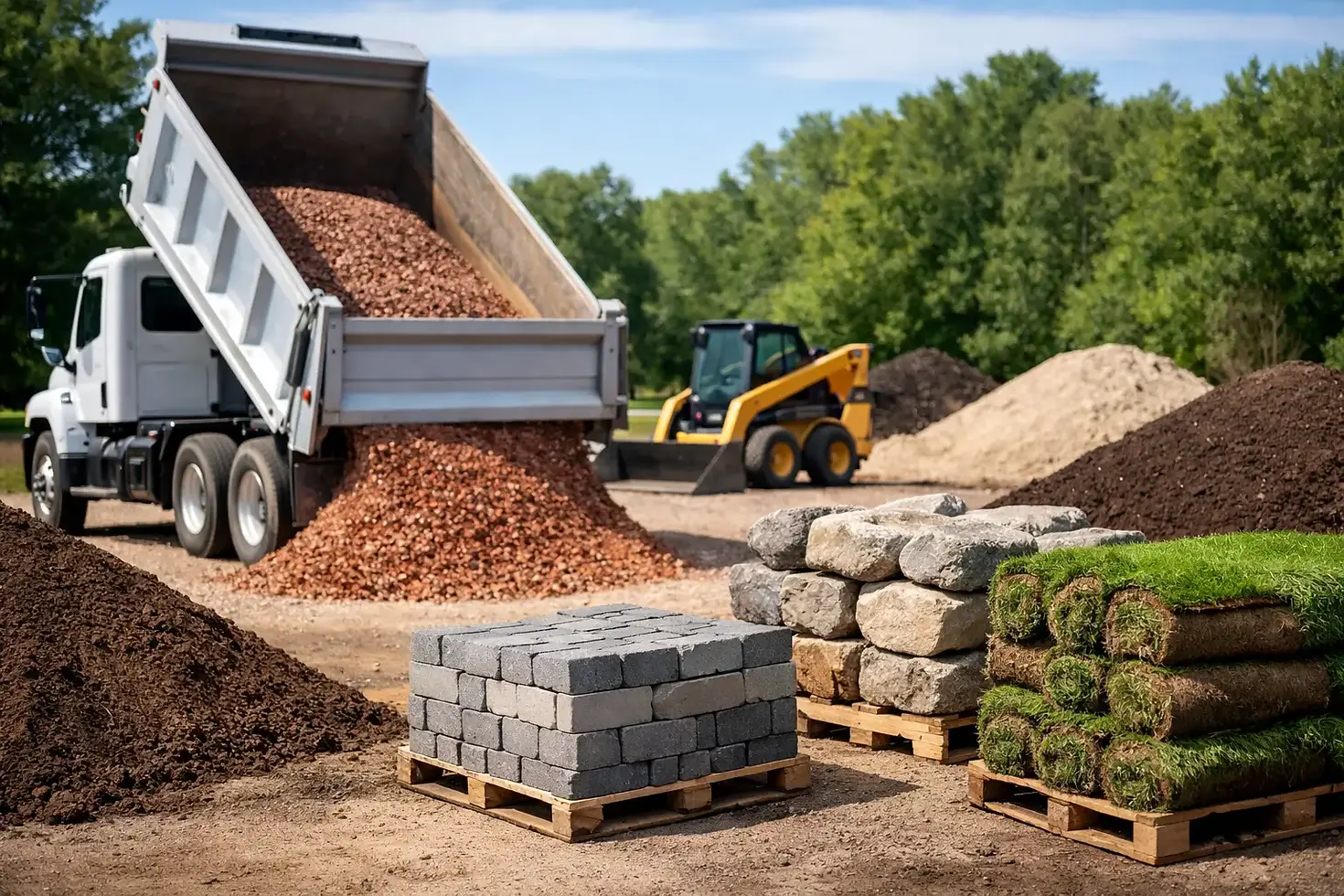
Material Delivery for Landscaping Projects

A landscaping project can be ready to start on Saturday morning and still lose half the day because the mulch, gravel, soil, or sod is not where it needs to be. Material delivery for landscaping projects is not just a matter of ordering a load. It is about getting the right material, in the right amount, to a spot where your crew - or your wheelbarrow - can actually use it.
For homeowners and contractors, the biggest delays usually come from underestimating quantity, overlooking site access, or scheduling delivery before the work area is ready. A little planning keeps the project moving and prevents a nice-looking yard upgrade from turning into a pile of material blocking the driveway.
Start With the Material and the Actual Quantity
Landscaping materials are sold and measured in different ways. Mulch, soil, compost, and gravel are commonly measured by the cubic yard. Sod is typically measured by the pallet or square foot. Pavers, edging, and retaining-wall block are often sold by the piece or pallet. Before arranging delivery, make sure the supplier and the person receiving the load are using the same unit of measurement.
For loose material, calculate the length and width of the area in feet, then multiply by the planned depth in feet. Divide that number by 27 to estimate cubic yards. For example, a 20-by-15-foot bed spread 3 inches deep needs about 2.8 cubic yards of mulch. It is usually smart to allow a little extra for uneven ground, settling, and the material that ends up along the edges.
Do not order by eye alone. One yard of mulch can look like a small pile when it arrives, while a few yards of rock can take up a serious amount of space. Stone, sand, and wet soil are also much heavier than mulch. That matters when deciding whether a pickup truck, utility trailer, or dump trailer is the right way to move material around the property.
Match the Delivery Method to the Job
A full supplier delivery makes sense when you need a large amount of bulk material and have room for a truck to unload. It can save multiple trips and keep a crew working instead of waiting on supplies. But the lowest delivery price is not always the lowest total cost if the load is dumped far from the work area or arrives before you are ready.
For smaller jobs, mixed-material projects, or sites with limited access, hauling materials yourself can offer more control. A rented trailer lets you pick up what you need when you need it, whether that is a load of mulch in the morning and pavers later in the day. It can also be a practical choice when you want to return unused bagged material or make a separate trip for disposal.
The right option depends on the material, the amount, your tow vehicle, and how close the delivery point is to the work. There is no benefit in saving on delivery if moving the pile across the yard takes two extra days of labor.
Prepare the Drop Zone Before Delivery Arrives
A delivery driver needs a clear, safe place to unload. Choose the drop zone before placing the order, not while the truck is turning onto the street. A driveway is often the easiest choice, but consider how long the material will sit there and whether cars need to come and go.
Loose material can stain concrete, scratch pavement, or leave residue behind, especially when wet. Put down a heavy tarp or plywood if the surface needs protection. Keep the pile away from garage doors, gates, drainage paths, mailboxes, and utility boxes. If rain is expected, avoid placing soil, sand, or mulch where runoff can wash it into a storm drain.
Access is just as important. Check for low tree limbs, parked vehicles, soft ground, tight turns, and overhead wires. A dump-style unloading method needs room to raise the bed safely. If the driver cannot reach the intended spot, the material may need to be placed somewhere less convenient, leaving you with more work to do.
For Florida properties, soft ground deserves extra attention. A yard that looks firm during a dry week may not support a loaded vehicle after a hard rain. When possible, use a stable driveway, packed base, or other solid surface for unloading. It is easier to plan a wheelbarrow route than to deal with ruts, a stuck trailer, or material dropped in the wrong place.
Schedule Around the Work, Not Just the Calendar
The best delivery day is the one that puts material on site shortly before it is needed. If your crew is installing edging and grading on Friday, having mulch delivered the previous weekend may create clutter and expose it to rain. If sod is arriving, timing matters even more. It should be installed promptly, especially during warm weather.
Think through the order of operations. Base material should arrive before pavers. Soil amendments should arrive before planting. Mulch should usually come after beds are shaped, plants are installed, and irrigation repairs are complete. Working backward from the finish line helps prevent double-handling.
If your project involves several materials, you may not want all of them delivered at once. A pile of rock, a pallet of block, and several yards of soil can overwhelm a small driveway. Staggering deliveries keeps the site safer and gives workers room to operate.
This is also where flexible hauling support can make a difference. Patriots Trailer Rental can help Central Florida customers who need a trailer for material pickup, delivery support, or a way to move debris out as the job progresses. For a homeowner handling a weekend project, that can be simpler than making repeated small trips in a pickup bed.
Know What Your Vehicle and Trailer Can Handle
Landscaping materials are easy to underestimate because they are familiar. A few buckets of gravel do not seem like much until they become a full trailer load. Wet soil, sand, crushed stone, concrete block, and pavers can add weight quickly.
Before loading, verify your tow vehicle's towing capacity, the trailer's payload capacity, hitch rating, and the allowable loaded weight. Payload is the weight of the material you can carry after accounting for the trailer itself. Do not rely on a trailer's appearance or fill it to the top just because there is open space.
Load dense material evenly and keep the weight low and centered over the trailer axles. An uneven load can sway, handle poorly, or put too much weight on the tongue or rear of the trailer. Secure pallets, bagged goods, tools, and anything that could shift during transport. A tarp is often needed for loose materials so nothing blows out on the road.
If you are unsure about weight, ask the supplier for an estimated load weight before pickup. It is better to make two safe trips than one overloaded trip that risks your equipment, your vehicle, and everyone else on the road.
Build Cleanup Into the Delivery Plan
Landscaping creates debris from the first day. Old mulch, broken pavers, branches, dirt, packaging, damaged plants, and torn-out edging all have to go somewhere. If disposal is not planned from the start, debris ends up taking over the same space needed for fresh material.
Keep incoming materials and outgoing debris separated. Designate one area for clean product and another for waste. That simple step prevents contaminated mulch, mixed piles, and wasted labor sorting material later. It also makes it easier to decide whether some items can be reused, recycled, or hauled to a landfill.
For larger cleanups, a dump trailer can keep debris contained while the work is underway. Once the project is done, landfill dump service or pickup support may save a final round of loading and unloading. The goal is not just a clean yard at the end. It is keeping the jobsite workable every day until then.
A Better Delivery Plan Saves More Than a Trip
Good material planning protects your schedule, your driveway, and your budget. Measure before ordering, choose a realistic drop zone, confirm access, and make sure the hauling setup fits the actual weight of the load. Those details are what keep a landscaping project from stalling when the material finally arrives.
Before you book delivery or pick up a trailer, stand at the curb and picture the full path: where the truck enters, where the material lands, how it reaches the work area, and how the leftover debris leaves. If that path makes sense, the rest of the project has a much better chance of going smoothly.


Comments